Designing a home used to mean hiring professionals, sitting through multiple consultations, and spending thousands of dollars before a single tile was laid or a single wall was painted. For most people, the gap between having a vision for a space and seeing it come to life was measured in weeks of waiting, rounds of revisions, and invoices that seemed to grow with every design change. That reality has shifted dramatically in the last few years, and a platform called Home Design AI sits at the center of that shift.
Home Design AI is not a single-purpose tool. It is a comprehensive online platform that brings together multiple AI-powered design capabilities — including a free online floor plan creator for mapping out layouts, an interior design generator for reimagining rooms, exterior remodeling tools, garden planning, furniture generation, and 3D visualization — all accessible through a browser without downloads, installations, or sign-up requirements. The platform is built on the idea that anyone should be able to explore, visualize, and plan their living spaces with professional-grade results, regardless of their design experience or budget. Whether you upload a photo of your actual room, describe what you want in plain text, or start from a blank canvas, the AI generates realistic, styled results in seconds.
What Makes Home Design AI Different
There are plenty of design apps and websites out there, but most of them fall into one of two camps: overly simplistic tools that produce cartoonish results, or professional software that requires weeks of learning and a powerful computer to run. Home Design AI occupies a space that few platforms manage to reach — it combines the ease of use that a complete beginner needs with output quality that genuinely impresses.
The core engine is powered by AI models specifically trained on interior design, architecture, and landscaping imagery. This specialization is what sets it apart from general-purpose image generators. When you upload a photo of your living room and select “Scandinavian” as the style, the system does not just slap a filter on the image — it analyzes the spatial layout, recognizes existing elements like windows, doors, and furniture placement, and generates a coherent redesign that respects the actual dimensions and structure of the room. The results look like professional renderings rather than approximations.
The platform covers three main design domains: Interiors (living rooms, bedrooms, kitchens, bathrooms, dining rooms, home offices, basements, and attics), Exteriors (house facades, siding, roofing, landscaping), and Gardens (patios, backyards, front yards, planting schemes). Each domain has its own specialized AI pipeline, ensuring that the output is contextually appropriate — garden designs focus on plants, pathways, and outdoor living elements, while interior designs emphasize furniture arrangement, color coordination, and lighting.
Designing from Every Angle: The Full Tool Suite
What makes Home Design AI a genuine platform rather than a single-feature tool is the breadth of its design capabilities. Users do not need to hop between different websites for different tasks — everything lives in one connected ecosystem. Here is a breakdown of the major tools and how they work together:
AI Room Design
The flagship feature of the platform. You upload a photo of any room — your actual living room, bedroom, or kitchen — choose from over 20 design styles including Modern, Minimalist, Scandinavian, Japandi, Midcentury Modern, Art Deco, French Country, and more, and the AI generates a fully redesigned version of that space in seconds. The system preserves the room’s structural elements while transforming colors, materials, furniture, and decor. It is an extraordinarily fast way to test design directions before committing a single dollar to paint or furniture.
Once your AI-generated layout is finalized and you purchase your dream furniture pieces, booking a dedicated courier via Shiply UK can make transporting heavy items or vintage decor easy and cost-effective
Floor Plan Creator
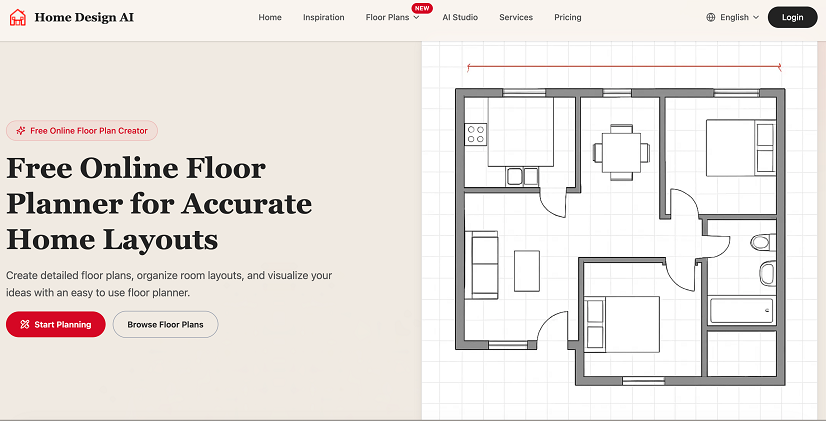
Before you think about colors and furniture, you need a clear layout. The platform includes a free online floor plan creator that lets you draw walls, position doors and windows, and define room divisions on a grid canvas with real-time measurement labels. Snap-to-grid alignment keeps everything precise, and the tool supports both metric and imperial units. Once your 2D layout is complete, you can switch to a 3D view and walk through the space virtually — a feature that has saved many homeowners from discovering awkward layouts only after construction began. Floor plans can be exported as SVG files for use in permit applications, contractor bids, or simply to share with family members.
AI Interior Design Generator
For those who prefer to work from ideas rather than photos, the text-based interior design generator creates complete room concepts from written descriptions. A prompt like “cozy farmhouse kitchen with white shaker cabinets, butcher block countertops, and a large island with pendant lighting” produces a photorealistic rendering of exactly that. This is especially useful during the brainstorming phase, when you have a mood in mind but have not yet settled on specifics. The tool helps bridge the gap between vague inspiration and concrete visual reference.
Home Design AI — The Core Engine
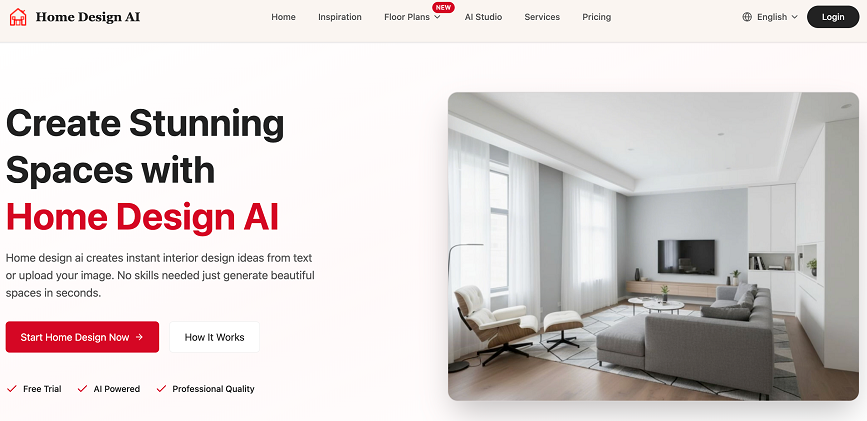
At the center of the platform is the home design ai free tool, which serves as the entry point for most users. Unlike the room-specific tools, this is a general-purpose AI home design generator that handles interiors, exteriors, and gardens from a single interface. You can upload an image or enter a text description, choose a style and room type, and the system produces up to four design variations at once. The flexibility of this tool makes it ideal for users who are exploring multiple aspects of a renovation — you might redesign your kitchen in the morning, reimagine your backyard in the afternoon, and preview a new facade for your house in the evening, all without leaving the same platform.
Who Is Using Home Design AI?
The platform has found adoption across a surprisingly diverse range of users, each with different needs but the same core problem: they want to see what a space could look like before investing real money in making it happen.
Homeowners planning renovations use it to test ideas before meeting with contractors. Instead of describing a vision verbally — “I want the kitchen to feel more open and brighter” — they can walk into the meeting with photorealistic renderings of exactly what they have in mind. This dramatically reduces miscommunication and expensive mid-project changes.
Real estate agents use it for virtual staging. An empty property photographed with bare walls and no furniture is hard for buyers to connect with emotionally. Uploading those photos and generating fully furnished versions helps potential buyers visualize themselves living there, without the cost and logistics of physical staging.
Interior designers use the platform to generate multiple concept directions in minutes rather than hours. Instead of creating mood boards manually, designers can input a client’s preferences, generate several design directions, and present them for feedback — all within a single session. The time savings alone makes the platform a valuable addition to any designer’s workflow.
Renters use it to explore decor ideas that work within the constraints of a lease. Since renters cannot make permanent changes, being able to visualize how different furniture arrangements, temporary wall treatments, and lighting setups would look in their actual space helps them make confident purchases without risking their security deposit.
DIY enthusiasts use the platform to experiment fearlessly. If you have ever painted a room only to realize the color looked completely different on the wall than it did on the swatch, you understand the value of previewing design decisions before executing them. The AI does not eliminate the trial-and-error process — it just moves it into a digital space where errors cost nothing.
Getting Started in Under Five Minutes
One of the most appealing aspects of Home Design AI is how little friction there is to getting started. There is no account required to begin, no credit card needed for the free tier, and no software to download. You navigate to the website, choose whether to upload a photo or enter a text description, select your preferences, and the AI begins generating results. The entire workflow from arrival to first design output typically takes under two minutes.
For the free tier, users receive a set number of design generations. The platform is transparent about its credit system — each design iteration costs one credit, and free credits are provided upon sign-up. For users who need more, paid plans unlock additional generations and higher-resolution outputs, but the free tier is generous enough that most casual users can fully explore their design ideas without reaching for a wallet. The platform works on desktop, tablet, and mobile browsers, though the best experience is on a larger screen where you can appreciate the detail in the generated images.
Why This Platform Is Worth Your Attention
What makes Home Design AI genuinely noteworthy is not any single feature but the way the entire ecosystem is designed around a clear, user-first philosophy. The tools are interconnected — you can design a floor plan, then use it as the basis for room-by-room AI redesigns, then step into a 3D walkthrough to experience the result from a first-person perspective. There is no export-import dance between separate applications, no compatibility issues, and no steep learning curve separating one function from the next.
The speed of iteration is the other quiet advantage. Traditional design processes involve waiting — waiting for a designer to produce mockups, waiting for renderings to process, waiting for feedback meetings. Home Design AI collapses those waiting periods into seconds. You can try ten different kitchen layouts in the time it would take to describe one over the phone to a contractor. That speed does not just save time — it encourages more creative exploration, which almost always leads to better final results.
For anyone currently staring at a room that could use a refresh, considering a renovation, or simply curious about what their space could become with a different approach, Home Design AI offers a zero-commitment way to start exploring. The tools are free to try, the results are immediate, and the only thing you risk is a few minutes of your time — and perhaps the pleasant surprise of discovering that your dream home is closer to reality than you thought.